
Why Knee Pads Don't Work
Even The Best Knee Pads Can Leave Your Knees Stiff And Sore
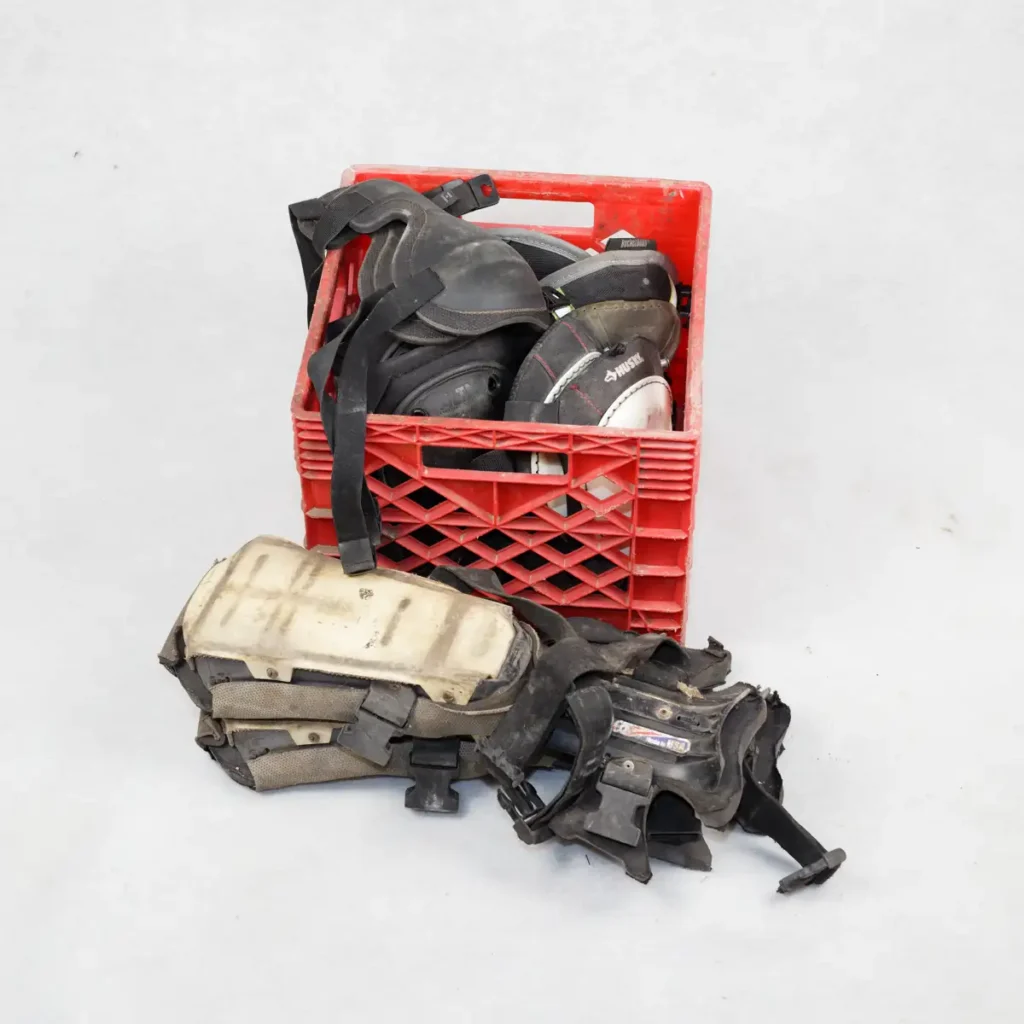
If you are like me, you have a growing collection of knee pads that don't work, and you are having trouble believing there is a solution to kneeling pain.
If you are in this situation, you will be happy to know there is a solution! You don't have bad knees; you have bad knee pads! There is a simple reason for why knee pads are not working.
If you are in this situation, you will be happy to know there is a solution! You don't have bad knees; you have bad knee pads! There is a simple reason for why knee pads are not working.
The Cause Of Kneeling Pain
Before we talk about the solution, we need to understand the problem. You should always consult a doctor to understand why your knee is sore and to make sure there isn't a more serious problem with your knee. But for the sake of this article, the most common reason kneeling is painful and leads to stiff or sore knees is because part of the knee joint is injured and has become sensitive to pressure from kneeling.
How Do Knee Pads Work
The knee pad is the default solution for kneeling pain, and the vast majority of knee pads are little more than a foam pad with straps. Sure, they are wrapped in fabric, shaped in an interesting way, and they may have a rubber or plastic outer layer. But when we take a look inside, they are just a foam pad.
If part of your knee is injured, what do you expect will happen when you kneel on a foam pad? What will the foam pad do to help your knee? Will the foam reduce pressure on your knee, or will it increase pressure?
The total amount of force applied to your knee when kneeling stays the same, regardless of whether or not you are wearing a knee pad. The pressure, which is the total force divided by surface area, may be slightly reduced when you kneel on a knee pad. This is because a foam pad works by increasing surface area on your knee, which reduces pressure
This idea of reducing pressure sounds great, but where does the pressure go? When your knee sinks into a foam pad, the foam pushes back against your knee, putting pressure on everything it touches--including the sore part of your knee! If your knee is sensitive to pressure, a knee pad is going to push on your sore knee all of the time. In some cases, a knee pad can do more harm than good!
So knee pads work by spreading out pressure, which is OK as long as our knees are healthy. But if our knees are already sore because of kneeling, a knee pad is not going to change anything!
If part of your knee is injured, what do you expect will happen when you kneel on a foam pad? What will the foam pad do to help your knee? Will the foam reduce pressure on your knee, or will it increase pressure?
The total amount of force applied to your knee when kneeling stays the same, regardless of whether or not you are wearing a knee pad. The pressure, which is the total force divided by surface area, may be slightly reduced when you kneel on a knee pad. This is because a foam pad works by increasing surface area on your knee, which reduces pressure
This idea of reducing pressure sounds great, but where does the pressure go? When your knee sinks into a foam pad, the foam pushes back against your knee, putting pressure on everything it touches--including the sore part of your knee! If your knee is sensitive to pressure, a knee pad is going to push on your sore knee all of the time. In some cases, a knee pad can do more harm than good!
So knee pads work by spreading out pressure, which is OK as long as our knees are healthy. But if our knees are already sore because of kneeling, a knee pad is not going to change anything!
"Knee Caps" Are Better Than "Knee Pads"
If knee pads don't work, what can we do about kneeling pain? We need a different approach to knee protection!
Career Savers are my solution. I call them "knee caps", because they are fundamentall different from "knee pads". I call them knee caps because they protect the knee with a rigid cap that spans over the knee joint. This cap is rigid and structural. It supports the wearer without bending or collapsing, and the shape was carefully sculpted to let the wearer kneel comfortably, without putting pressure on the sore part of the knee.
Don't confuse "knee cap" with "hard shell knee pad". At a glance they may look the same, but they are completely different! A hard shell knee pad uses a thin, hard plastic shell designed to be slippery, but this shell is typically flexible. This plastic shell is not designed to protect your knee, not the way that Career Savers are designedto protect your knees! Compare the flexible plastic to the super strong carbon fiber cap used in Career Savers--there really is no comparison!
The product category of "knee cap" is not well established, but I think the industry needs to learn from all the people who complain that knee pads don't work for them and adopt this new category! The idea of a knee cap and why it works is not very difficult to understand, but there are very few products that provide this kind of knee protection!
Career Savers are my solution. I call them "knee caps", because they are fundamentall different from "knee pads". I call them knee caps because they protect the knee with a rigid cap that spans over the knee joint. This cap is rigid and structural. It supports the wearer without bending or collapsing, and the shape was carefully sculpted to let the wearer kneel comfortably, without putting pressure on the sore part of the knee.
Don't confuse "knee cap" with "hard shell knee pad". At a glance they may look the same, but they are completely different! A hard shell knee pad uses a thin, hard plastic shell designed to be slippery, but this shell is typically flexible. This plastic shell is not designed to protect your knee, not the way that Career Savers are designedto protect your knees! Compare the flexible plastic to the super strong carbon fiber cap used in Career Savers--there really is no comparison!
The product category of "knee cap" is not well established, but I think the industry needs to learn from all the people who complain that knee pads don't work for them and adopt this new category! The idea of a knee cap and why it works is not very difficult to understand, but there are very few products that provide this kind of knee protection!
Knee Pads/ Knee Caps that Actually Work
My goal is to help you overcome crippling kneeling pain so you can get on with your career and with your life. So I want to share what I learned about knee pad products that actually worked. While I as still struggling to solve my kneeling pain, there were two products that helped me more than the others. I think telling you about these products will help you better understand how my product works and how it fits in with other products. If my product is not right for you, one of these others may be what you need.
One product is the ProKnee, the OG of flooring knee pads, with their shin pad style knee pad, and the other is the Arc'teryx Leaf knee caps. These two products are opposite ends of the spectrum, and I designed Career Savers fit inbetween them.
One product is the ProKnee, the OG of flooring knee pads, with their shin pad style knee pad, and the other is the Arc'teryx Leaf knee caps. These two products are opposite ends of the spectrum, and I designed Career Savers fit inbetween them.
Proknee
Proknee is well known among flooring installers. They are not knee caps, but they pioneered a different approach to providing knee protection--their shin pad style design design takes pressure off of your knee by putting all of your weight on your shins. When you are sitting on your heels, your knees don't have any pressure on them. But there is a catch--if you lean forward, all of your weight transfers to the front of your knees, and they become no different from an ordinary kneeling pad.
I own a pair of proknees from years ago when I was a hardwood flooring installer, and they worked great. So when my knee started getting stiff and sore, I tried using my proknees. I was surprised that they didn't help. Now I understand they didn't help because I was always leaning forward, putting pressure directly on my knees. I was not getting the benefit from them, because I wasn't using them as designed.
Also, they were a poor fit for the work I was doing. My new job required me to be very active, walking miles per day, walking back and forth between equipment, working outdoors and periodically climbing down into tight piping sumps or climbing up ladders. Because of this activity, I would just leave them on the ground like kneeling pads. I definitely was not using them as they were intended, so it wasn't their fault that they were not solving my problem.
I own a pair of proknees from years ago when I was a hardwood flooring installer, and they worked great. So when my knee started getting stiff and sore, I tried using my proknees. I was surprised that they didn't help. Now I understand they didn't help because I was always leaning forward, putting pressure directly on my knees. I was not getting the benefit from them, because I wasn't using them as designed.
Also, they were a poor fit for the work I was doing. My new job required me to be very active, walking miles per day, walking back and forth between equipment, working outdoors and periodically climbing down into tight piping sumps or climbing up ladders. Because of this activity, I would just leave them on the ground like kneeling pads. I definitely was not using them as they were intended, so it wasn't their fault that they were not solving my problem.
Arc'teryx Leaf Knee Caps
I found the Arc'teryx Leaf knee caps when I was feeling pretty hopeless about my career. I was using the Proknees, but they were not helping very much. Every other knee pad I tried had failed, and I was painfully aware that all the knee pads were failing because they were all the same. Then I found the Leaf Knee Caps while I was searching to find something different.
The Leaf Knee Caps looked different, and they were the only product described as a "knee cap". I was curious, but they were expensive. I didn't know if they were expensive because they were sold by Arc'teryx, or if they were expensive because they were actually good. I hesitated, but my knee wasn't getting any better. Eventually I decided to give them a shot.
(At the time the Leaf Knee Caps were available for retail purchase, but at the time of writing, sales are restricted to military, police, and first responders.)
These knee caps are important in my journey because they actually worked. They showed me that protecting my knees while doing my job is possible. After wearing them for a week, my knees were significantly improved! I found that everything reviewers say about them is true--they feel unstable, but I didn't care. If they let me kneel comfortably, nothing else mattered!
Everything was great for 3 months, but then my knee started to get sore again. I was still wearing the Leaf Knee Caps, so what was wrong? I inspected them, but I couldn't find anything wrong. My knee got progressively more sore, and eventually I noticed that if I flex the knee cap with my hands, I could see that the thermoformed plastic cap inside had cracked, and the domed cap was collapsing when I kneeled on them. So I bought another pair. Three months later my knee started getting sore again; the new pair cracked the same as the first! I ended up going through 4 pairs before taking matters into my own hands.
The Leaf Knee Caps looked different, and they were the only product described as a "knee cap". I was curious, but they were expensive. I didn't know if they were expensive because they were sold by Arc'teryx, or if they were expensive because they were actually good. I hesitated, but my knee wasn't getting any better. Eventually I decided to give them a shot.
(At the time the Leaf Knee Caps were available for retail purchase, but at the time of writing, sales are restricted to military, police, and first responders.)
These knee caps are important in my journey because they actually worked. They showed me that protecting my knees while doing my job is possible. After wearing them for a week, my knees were significantly improved! I found that everything reviewers say about them is true--they feel unstable, but I didn't care. If they let me kneel comfortably, nothing else mattered!
Everything was great for 3 months, but then my knee started to get sore again. I was still wearing the Leaf Knee Caps, so what was wrong? I inspected them, but I couldn't find anything wrong. My knee got progressively more sore, and eventually I noticed that if I flex the knee cap with my hands, I could see that the thermoformed plastic cap inside had cracked, and the domed cap was collapsing when I kneeled on them. So I bought another pair. Three months later my knee started getting sore again; the new pair cracked the same as the first! I ended up going through 4 pairs before taking matters into my own hands.
Career Savers Combine The Best Of Both
By the time I was on my 4th pair of Leaf knee Caps, I realized that they were not a sustainable solution for me. I needed something more durable, which gave me an idea. I decided to design my own knee caps!
The weakness of the Leaf Knee Caps is the thermoformed cap. The domed shape is strong and light weight, but it is also tippy and susceptible to cracking. I realized that if I made a cap out of a composite material like fiberglass or carbon fiber, it would not crack so easily. And a composite material would allow me to create a more complex shape, which would allow me to make something better.
I also learned from Proknee. Their design works by transferring pressure to the shin, so I designed Career Savers to transfer the majority of kneeling pressure to the shin, well away from the sensitive knee joint. The Career Saver transfer pressure to the shin all of the time, not just when sitting on your heals.
The result is the Career Savers, a knee cap that sits inbetween the Proknee and the Leaf Knee Cap. Career Savers are designed to be light weight and compact, but they a little heavier than the Leafe Knee Caps to make them to stronger, more durable, and as comfortable as possible. They provide a stable work platform, and they transfer kneeling pressure to the shins, safely away from your sensitive knee. And they completely protect your knee in any kneeling position.
At the end of the day, the Proknee is for flooring work, for people who kneel all day long. The Leaf Knee Cap is for a military uniform, designed to be extremely light, to be worn all the time, but only kneeled on occasionally. Career Savers fit in the middle--they are for people who kneel regularly throughout the day, but who are not staying on their knees for hours at a time like a flooring installer.
The weakness of the Leaf Knee Caps is the thermoformed cap. The domed shape is strong and light weight, but it is also tippy and susceptible to cracking. I realized that if I made a cap out of a composite material like fiberglass or carbon fiber, it would not crack so easily. And a composite material would allow me to create a more complex shape, which would allow me to make something better.
I also learned from Proknee. Their design works by transferring pressure to the shin, so I designed Career Savers to transfer the majority of kneeling pressure to the shin, well away from the sensitive knee joint. The Career Saver transfer pressure to the shin all of the time, not just when sitting on your heals.
The result is the Career Savers, a knee cap that sits inbetween the Proknee and the Leaf Knee Cap. Career Savers are designed to be light weight and compact, but they a little heavier than the Leafe Knee Caps to make them to stronger, more durable, and as comfortable as possible. They provide a stable work platform, and they transfer kneeling pressure to the shins, safely away from your sensitive knee. And they completely protect your knee in any kneeling position.
At the end of the day, the Proknee is for flooring work, for people who kneel all day long. The Leaf Knee Cap is for a military uniform, designed to be extremely light, to be worn all the time, but only kneeled on occasionally. Career Savers fit in the middle--they are for people who kneel regularly throughout the day, but who are not staying on their knees for hours at a time like a flooring installer.